
How is Luxembourg’s inclusive and impact finance ecosystem structured? Which organisations are shaping it, what roles do they play, and where are the opportunities for further development?
These questions were at the heart of a presentation organised during Inclusive Finance 26 (IF26), where InFiNe, the Luxembourg Sustainable Finance Initiative (LSFI) and the Impact Investing Advisory Board (IIAB) shared the latest developments and findings from their joint mapping initiative.
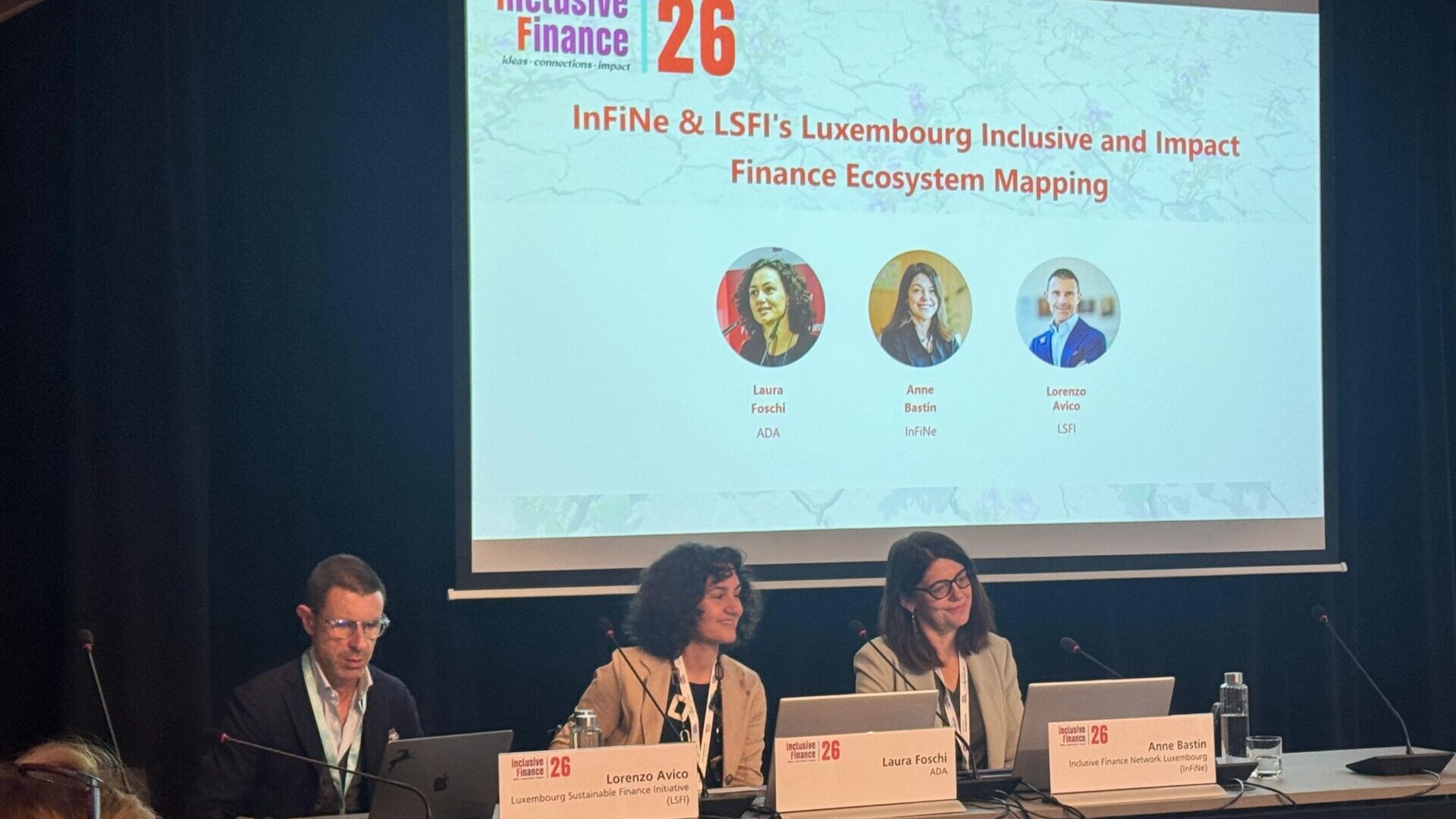
Presented as part of a panel discussion, the session introduced two complementary outputs: an interactive online dashboard providing an overview of the organisations active in Luxembourg’s inclusive and impact finance ecosystem, and a qualitative study examining the sector’s structure, strengths and challenges.
Building on InFiNe’s earlier mapping of Luxembourg’s inclusive finance ecosystem, the initiative extends its scope to include the broader impact finance landscape.
The interactive dashboard offers a structured overview of organisations linked to Luxembourg, allowing users to explore their profiles, activities, areas of expertise, geographic and thematic focus, and roles in the allocation of capital.
The mapping draws on a voluntary survey conducted in March and April 2026. Of the 83 organisations contacted for the impact finance study, 62 responded, representing a response rate of 75%. The findings therefore provide a valuable picture of the ecosystem, while recognising that the exercise is not an exhaustive census.
The data reveals a diverse landscape: 44% of respondents are ecosystem enablers, 29% are intermediaries, 18% are involved in the supply of impact capital, while 5% represent demand for capital and 5% government and policy institutions.
The presentation also introduced the findings of the Mapping of Luxembourg Impact Finance Ecosystem report, which combines survey results with 23 in-depth interviews with senior ecosystem representatives.
The analysis highlights several structural strengths, including Luxembourg’s established fund infrastructure, regulatory environment and international financial expertise. At the same time, it points to opportunities to strengthen the ecosystem further.
Among the themes emerging from the research are the need to mobilise more domestic capital towards impact investment, support emerging fund managers, improve access to investment opportunities for smaller actors and strengthen coordination across the ecosystem.
One message stands out: continued development will depend not only on Luxembourg’s existing financial infrastructure, but also on the ability of its actors to work together, share knowledge and build stronger connections.
The mapping is intended as a living resource for organisations, investors, public institutions, researchers and other stakeholders interested in understanding Luxembourg’s inclusive and impact finance landscape.
It is also a starting point. Based on voluntary, self-reported information, the dashboard will evolve as organisations update their profiles and more actors contribute to the initiative.
By bringing together data, organisational profiles and research insights, InFiNe, LSFI and the IIAB aim to make the ecosystem more visible, easier to navigate and better connected.