
At its latest Knowledge Sharing Event, InFiNe welcomed Stéphane Van Haute, Climate Adaptation & Communications Director at Friendship Luxembourg, to explore how integrated approaches can strengthen resilience in some of the world’s most climate-exposed regions.
The discussion highlighted how financial inclusion, when embedded within broader development strategies, can contribute to sustainable and impactful change.
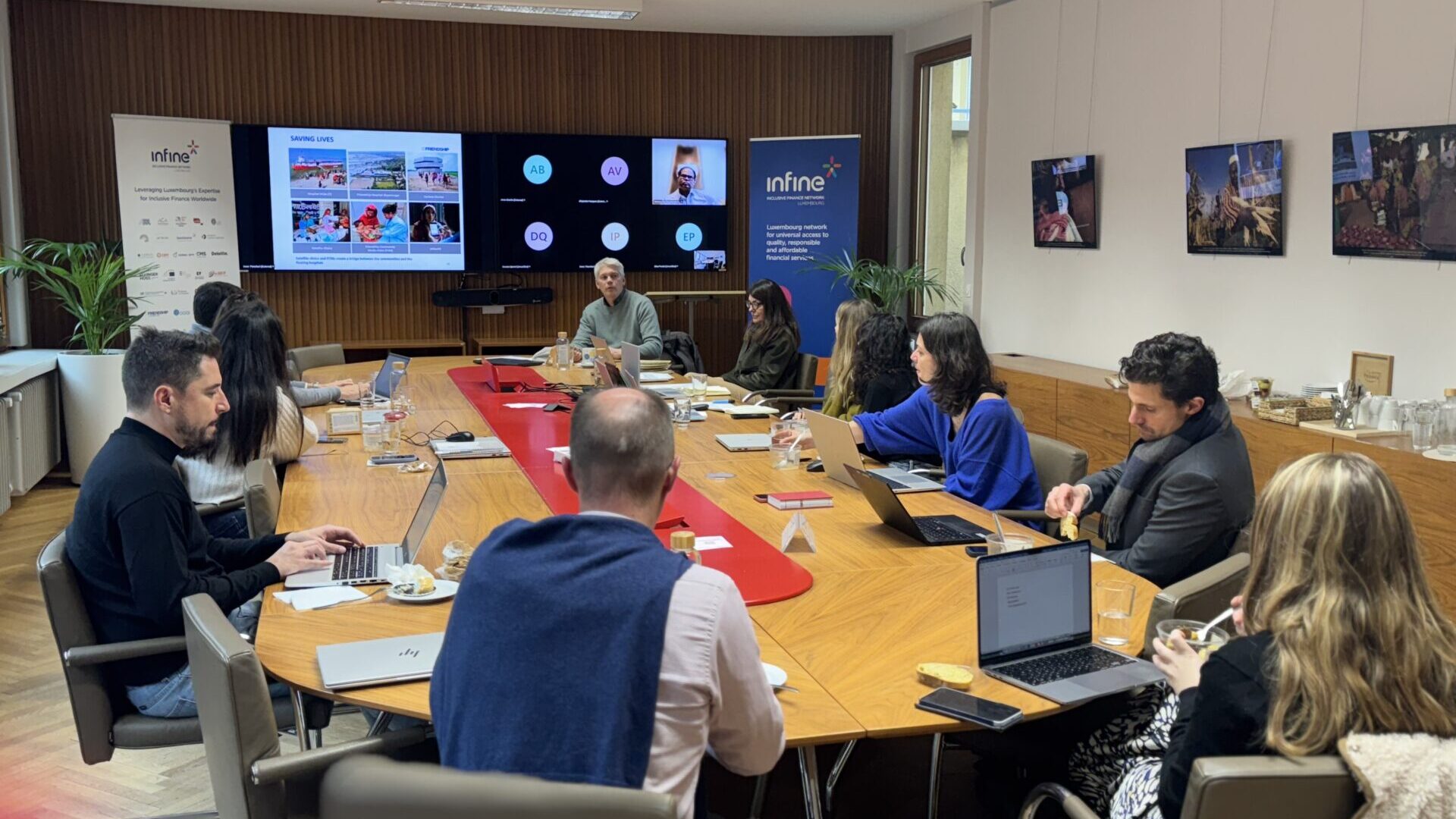
Bangladesh faces recurrent floods, cyclones and rising environmental pressures. In riverine char areas and low-lying coastal regions, entire communities live with constant uncertainty. Infrastructure is fragile, livelihoods are climate-sensitive, and access to essential services remains limited.
In such contexts, development cannot be approached in silos. Health, income generation, education and climate resilience are deeply interconnected. Addressing one dimension without the others risks reinforcing existing vulnerabilities.
For over two decades, Friendship has worked in Bangladesh’s most marginalised areas, developing what it now defines as an Integrated Climate Adaptation approach.
Its model connects:
By linking these pillars, Friendship seeks to create reinforcing effects: healthier communities are better positioned to invest, adapt and participate economically; climate-resilient livelihoods reduce financial fragility; financial services enable long-term planning and investment.
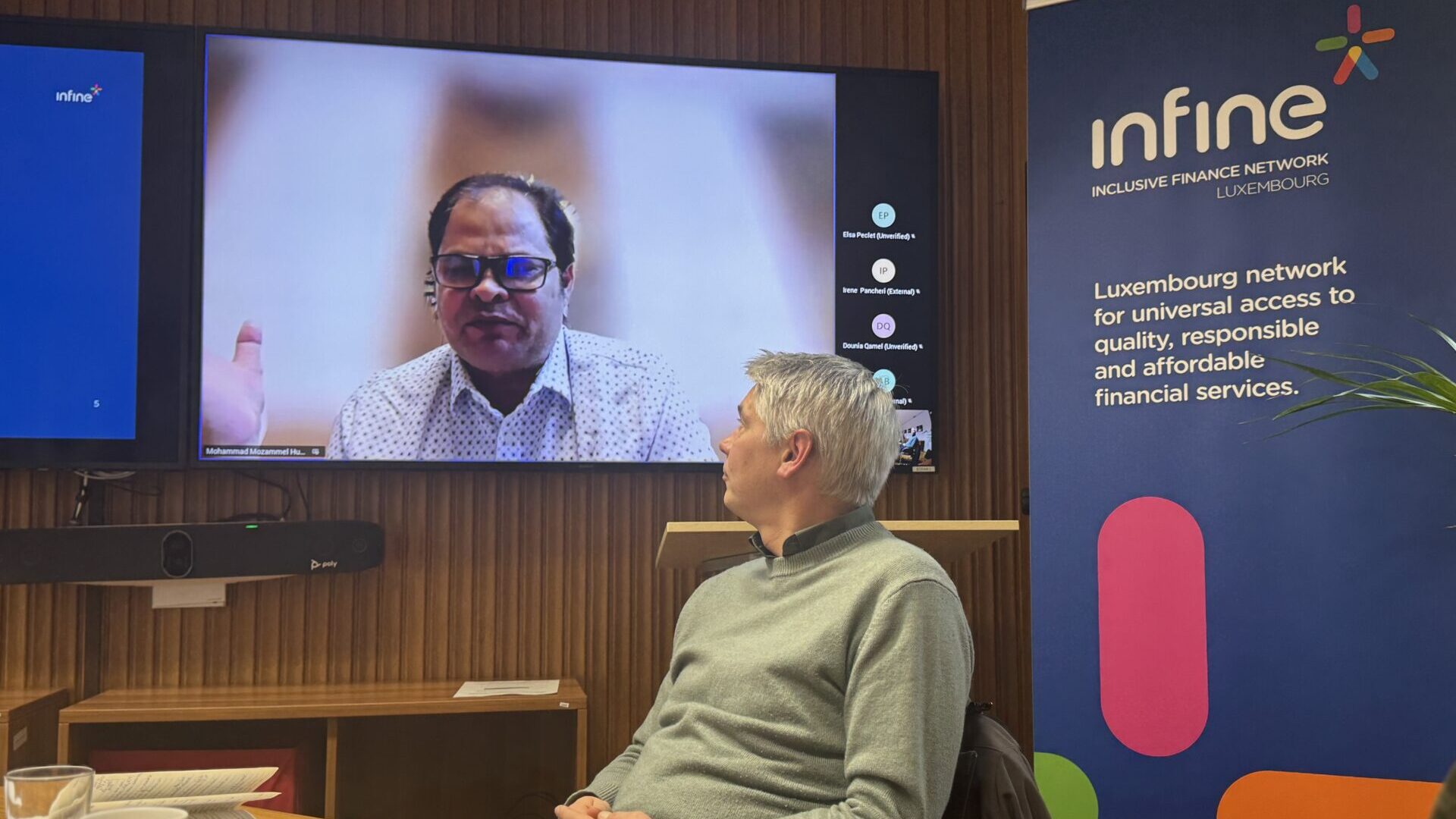
Through APDS, Friendship delivers tailored financial services in flood-prone and hard-to-reach areas where conventional providers are often absent. Flexible loan products, savings mechanisms and micro-insurance solutions respond to the realities of seasonal income and climate shocks.
Rather than viewing microfinance as the final stage of development, the model positions it as part of a broader resilience pathway, enabling communities to strengthen livelihoods while navigating environmental uncertainty.
Support from Luxembourg-based partners, including technical and financial assistance, illustrates how international collaboration can reinforce local capacity and innovation.
A key takeaway from the discussion is the importance of systems thinking. Climate change challenges the traditional boundaries between sectors. Effective responses require collaboration across health, finance, education and environmental adaptation.
For InFiNe, this exchange reaffirmed the value of bringing together actors from the public, private and civil society sectors to share practical experiences and foster dialogue on inclusive and impact-driven finance. As climate pressures intensify globally, integrated and locally grounded approaches such as Friendship’s offer important lessons for the future of inclusive finance.